During the past decade, the Soviets allocated resources equivalent to approximately $400 billion to both strategic offensive and defensive programs in almost equal amounts roughly $20 billion per year for each program. Space programs during this same period approached $80 billion.
Since 1981, Soviet strategic nuclear offensive forces have been upgraded as deployment of a fourth generation of intercontinental ballistic missiles (ICBMs)(the SS-17, SS-18, and SS-19) was completed. In 1985, the Soviets introduced the road-mobile SS-25, and in 1987 they began deployment of the rail-mobile SS-24 ICBM. In the Soviet ballistic missile submarine fleet the TYPHOON, carrying 20 SS-N-20 MIRVed (multiple,independently-targetable reentry vehicles) missiles, was introduced, followed closely by the new DELTA IV carrying the even more capable SS-N-23. Soviet long-range bomber capabilities were enhanced by the introduction of the BEAR H carrying the AS-15 nuclear-armed cruise missile. Deployment of the new long-range strategic bomber, the BLACKJACK, is imminent.
In the area of strategic defense, the Soviets are modernizing the ballistic missile defense system around Moscow by replacing 64 old, reloadable above-ground GALOSH launchers with a two-layer defense composed of silo-based, long-range, modified GALOSH interceptor missiles; silo-based GAZELLE high acceleration end atmospheric interceptor missiles; and associated engagement, guidance, and battle management radar systems, including the new PILL BOX phased-array radar near Moscow at Pushkino. This phase of the modernization program should be completed in the late 1980s.
In space developments, the Soviets have orbited their MIR space station, established new endurance records for men in space, flight-tested a subscale model of what appears will become their space plane, and deployed a new medium-lift launcher, the SL-16. In addition, the Soviets launched their heavy-lift SL-X-17, capable of carrying payloads in excess of 100,000 kilograms. The SL-X-17 will also be used to launch the Soviet version of the space shuttle, which the Soviets acknowledge has undergone flight testing under its own power.
These are but a few examples of the trends in Soviet strategic programs. In this chapter, these and other trends, as well as future prospects, are discussed.
STRATEGIC FORCES
Missions and Operations
The Strategic Rocket Forces (SRF) constitute the Soviets' premier military service. Created in 1959 to control all long-range, land-based missiles with a range exceeding 1,000 kilometers, the SRF plays the dominant role in the Soviet strategic forces, controlling over 6,000 of the Soviets' 10,000 strategic warheads.
In a nuclear conflict, SRF missiles would attack:
- Enemy nuclear forces, including silos, missile sites, airfields, naval bases, weapons depots, and nuclear command-and-control facilities;
- Enemy power-projection assets, including military forces, ports, and transportation links; and
- Enemy civilian and military industrial facilities.
Soviet military planners anticipate having to launch their nuclear forces under a variety of circumstances. Thus, they have conducted training and built assets to support the following operations.
Preemption - To achieve the capability to execute this preferred option, the Soviets have emphasized the collection and processing of strategic intelligence concerning their potential enemies' intentions. If convinced that the time for nuclear preemption has come, the Supreme High Command would order a strategic strike. To ensure that the SRF will be ready, the Soviets conduct numerous test missile launches throughout the year, many of them from operational bases.
Launch on warning - The comprehensive Soviet planning for a nuclear war includes preparing their forces to perform their missions under the most adverse conditions. In the event the Soviets fail to execute their preemptive option, they will depend on their early warning networks to provide them with sufficient response time. This network comprises launch detection satellites and over-the-horizon radars that can ascertain the general direction of an attack and provide up to 30 minutes warning. Eleven HEN HOUSE radars located around the USSR, which will be augmented in the mid-199Os by nine new large phased-array radars, can confirm the attack and begin missile tracking. Once notified, the SRF would have to launch its missiles before enemy warheads hit. To ensure that it can do so, the SRF exercises the procedures involved in such a response.
Launch after attack - Should the SRF not launch some or most of its missiles before an enemy attack, the Soviets have made provisions to help them survive the attack and conduct strikes in response. Their silos and launch control facilities, as well as their command, control, and communications links to the Supreme High Command, are hardened and highly survivable.
Command and communications entities also have mobile back-up units. To enhance survivability further, the Soviets have included both rail- and road-mobile missiles in their newest generation of ICBMs. Provisions have been made to refurbish and reload SRF silos, thereby enabling the Soviets to fire additional strategic missiles. These techniques will also be used after both sides' initial strikes during the period of prolonged nuclear conflict envisioned in Soviet doctrine.
ICBM Force Developments
The period 1980 to 1988 witnessed the rapid modernization and sophistication of the Soviet ICBM arsenal. Soviet missiles have been upgraded or replaced with new models of greater accuracy and survivability. After 30 years of sustained growth and improvement, the Soviet Strategic Rocket Forces are extremely capable of conducting global nuclear strikes. Yet improvements to this force continue unabated. By the mid-199Os, the Soviets will be fielding a completely new generation of increasingly accurate missiles, many of them mobile, posing a heightened threat to US strategic forces. The Soviets maintain numerous SS- 11 and SS- 13 third-generation ICBMs. While these missiles are not capable of destroying hardened targets, they are fully capable of destroying unhardened targets.
The centerpiece of the current Soviet SRF arsenal is the SS-18 heavy ICBM, designed to destroy hardened targets such as ICBM silos and command facilities. This missile, larger than the US PEACEKEEPER, has been modernized over the last seven years. The majority of the current force consists of SS-18 Mod 4s, which carry 10 MlRVed warheads. The SS-18 force alone could destroy 65 to 80 percent of all US ICBM silos using two warheads per target, and still have 1,000 warheads remaining. The total SS-18 force has about 3,000 warheads.
The Soviets have also modernized their other two fourth-generation ICBMs, the SS-17 and SS-19. The SS- 19 Mod 3 carries six MIRVed warheads and is roughly comparable in size to the US PEACEKEEPER. The SS-17 Mod 3, while less accurate than the SS-18, carries four warheads and can destroy any unhardened targets. Both the SS- 17 and SS- 19 are capable of flexible targeting: they can hit Eurasian as well as transoceanic targets with a total of about 2,700 warheads, thereby facilitating the Soviet Union's ability to adjust to the situation created by the Intermediate-range Nuclear Forces (INF) Treaty.
The Soviets have invested enormous effort and resources in increasing the survivability of their strategic systems against nuclear attack. To make their fourth generation missiles survivable, for instance, the Soviets placed them in rebuilt, very hard silos. Of the Soviet inventory of 1,400 operational ballistic missile silos, 818 have been rebuilt since 1972. Fully one-half of these silos have been totally reconstructed and hardened since 1980.
The Soviets have begun operating fifth-generation ICBMs, missiles with great throwweight and accuracy. They use solid-fuel propellants (which provide longer life and require less maintenance), and are fully mobile, and hence highly survivable. The SS-24, currently in the initial stages of deployment, is comparable in size to the US PEACEKEEPER. It carries 10 warheads and is designed for both rail and silo deployment. The SS-25 is a road-mobile, single-warhead, three-stage system. It can fire from field deployment sites or through the sliding roof garage it occupies at its base. The missile's mobility makes it inherently survivable and capable of reload/refire operations. The SS-25 joined operational Soviet SRF regiments in 1985.
By the 1990s, assuming the continuation of the current modernization tempo, the Soviets will be in a position to field over 15,000 warheads. Additionally, these weapons would be placed on newer, more capable and survivable strategic delivery systems during the next decade. It is likely that by the mid-199Os, the Soviets will have completely phased out their third-generation missiles, while the fourth-generation will be undergoing replacement by systems currently in development and testing. The SS-18 Follow-On, a more accurate version than its predecessor, has been tested recently; preparations for deployment of this missile are already underway. In October 1987, the US protested the apparent Soviet intention to test the SS-18 Follow-On in such a manner as to have its reentry vehicles land in the Pacific extremely close to the major populated islands of Hawaii. Mobile, solid-fueled SS-24s and SS-25s will be fully operational and will themselves be replaced by follow-on systems in the next decade. These advances will ensure that the Soviet ICBM force will remain the world's largest and most modern strategic missile force.
Submarine-Launched Ballistic Missile Force Developments
The Soviet Navy operates the world's largest strategic missile submarine force. Although it includes some older submarines, the majority of the nuclear-powered ballistic missile submarine (SSBN) force consists of more modern DELTA I, II, and III submarines armed with intercontinental-range missiles that can reach North America from Soviet ports and coastal waters.
Within the last seven years, the Soviets have introduced the TYPHOON and the DELTA IV, both equipped with more accurate, longer range MIRVed intercontinental missiles. The introduction of these systems has enabled the Soviets to increase their SLBM weapons delivery capabilities by nearly 30 percent without increasing the overall size of their SSBN force. At the same time, submarine survivability was being significantly enhanced.
Based in the Pacific Ocean and Northern Fleet areas, the Soviet ballistic missile submarine force is equipped with over 3,000 warheads on submarine-launched ballistic missiles (SLBMs). In wartime, a portion of these forces is expected to serve as a survivable nuclear reserve. In the last decade, the deployment of multiple warhead SLBMs with ranges sufficient to reach the United States from waters near the USSR has allowed the Soviets to plan to operate the majority of their SSBNs in protected "bastions," or havens, near the Soviet Union. Mixed groups of naval air, surface, and submarine assets, along with fixed sensors and minefields, will operate in wartime to protect these SSBN bastion areas against US/NATO antisubmarine forces.
Additionally, within the last several years the Soviet Navy has increased greatly its interest in the Arctic as an area of military operations, particularly for its SSBNs. The Soviets think that SSBN operations in the Arctic ice zone could increase submarine survivability, based on their belief that operations under and near the Arctic ice pack might provide their deployed SSBNs with greater security and protection than in more exposed waters.
To ensure that they can communicate with their SSBN/SLBM assets, the Soviets have recently improved their submarine command, control, and communications (C3) systems by deploying an extremely low frequency (ELF) communications system. Newly deployed BEAR J aircraft offer an additional means of effective SSBN communication redundancy by providing very low frequency (VLF) communication transmissions to SSBNs on patrol.
The Soviets may begin at-sea flight testing of a modified version of the SS-N-20 missile sometime this year. A modified version of the SS-N-23 missile will probably complete testing in 1988. Improved accuracy of the Soviets' latest SLBM systems, as well as possible efforts to increase SLBM reentry vehicle size and warhead yield, would confirm Moscow's plans to develop a hard-target-kill capability for its SLBM force. The new missile support ship class, the ALEXANDER BRYKIN, is designed to reload SSBNs with these modern missiles. This capability will allow Soviet SSBNs to hold additional targets at risk.
Soviet Strategic Aviation Developments
The Soviet intercontinental bomber force has historically lagged behind the SRF and navy in systems development. Recent Soviet efforts in strategic aviation, however, particularly with the BEAR H and BLACKJACK long-range bombers, signal heightened interest in a manned-bomber attack force to diversify the character of their strategic forces.
The BLACKJACK is the world's largest and heaviest bomber. Designed to carry bombs and air-launched cruise missiles (ALCMs), the BLACKJACK can cruise subsonically over long ranges, perform high-altitude supersonic dash, and attack utilizing low-altitude, high subsonic penetration maneuvers. As with the B-l, the BLACKJACK has a blended wing-body design with a variable-sweep wing and a single vertical stabilizer. It has an unrefueled combat radius of about 7,300 kilometers and a maximum speed of Mach 2.0. Eleven BLACKJACK bombers have been produced, and the first BLACKJACK regiment should begin forming this year. The backbone of the modern Soviet intercontinental bomber force of the 1980s, however, will remain the BEAR H, armed with the AS-15/KENT ALCM. The Soviets also have in their inventory about 100 other BEAR bombers and air-to-surface missile carriers. The BEAR was first produced in the late 1950s, but some of these aircraft have been updated in subsequent years with new technology.
Soviet strategic aviation capabilities are enhanced through training and exercises. BEAR H bombers are regularly observed simulating attacks against North America. When operational, the BLACKJACK can be expected to engage in similar operations. Additionally, older BEAR bombers carrying the AS-3 air-to-surface missile (ASM) are being rejuvenated through a modification program that upgrades them to carry the newer AS-4 supersonic ASM. More than 45 of these reconfigured aircraft, designated BEAR Gs, are now operational.
The current Soviet intercontinental bomber force is more flexible and survivable than it has ever been. Prior to the recent introduction of longer range cruise missiles, Soviet bombers would have had to penetrate Canadian or US airspace to launch their attacks. Now the BEAR H can launch its long-range AS-15 cruise missiles from well offshore and still hit targets in North America. The BLACKJACK will be able to conduct both standoff and penetration attacks using a variety of nuclear missiles and bombs.
Until recently, the Soviets had only aging BISON tankers for aerial refueling support of BISON and BEAR aircraft. In 1987, the first unit of new MIDAS tankers entered operational service. While the BISON tankers remain in service, they are expected to be replaced as sufficient numbers of MIDAS tankers become available.
Cruise Missile Developments
The Soviets are on the verge of deploying a variety of sophisticated cruise missile systems. At sea, the Soviets have tested the SS-N-21 sea-launched cruise missile (SLCM). A variety of Soviet general purpose attack submarines such as VICTORs, AKULAs, or SIERRAs could carry and launch the SS-N-21. Additionally, a YANKEE-Class nuclear submarine has been converted to carry SS-N-21 missiles. Targets in either Eurasian or North American theaters could be attacked by these accurate missiles, which are fitted with nuclear warheads. The larger SS-NX-24 missile, which could be carried from specialized submarine platforms such as a modified YANKEE, is expected to be operational in the next few years.
The Soviets have deployed an air-launched long range cruise missile the AS-15/KENT with their intercontinental-range BEAR H force. Armed with this standoff weapon, the BEARs pose a much greater threat to Eurasian and US targets. Work on a new bomber-launched cruise missile is underway.
The Soviets had developed and were preparing to deploy a ground-launched cruise missile (GLCM)the SSC-X-4 which is a version of the SS-N-21/AS-15 system. A GLCM-variant of the larger SS-NX-24 was also a possibility as a theater strike weapon. Both GLCM systems are banned by the INF Treaty.
INTERMEDIATE-RANGE NUCLEAR FORCES
In addition to ICBMs, the SRF is responsible for intermediate-range (IRBM) and medium-range (MRBM)ballistic missiles the latter two being longer range intermediate-range nuclear forces. The INF Treaty will eliminate these Soviet systems. Until the treaty enters into force and the missiles are destroyed as required over a three-year period, INF systems, such as the SS-20, will continue to pose a threat to Eurasian targets.
The last seven years have seen the full expansion and deployment of the Soviet SS-20 IRBM force, from approximately 250 SS-20s in 1980 to a high of 441. The less capable SS-4 MRBM force has been reduced in size during this period, and now numbers approximately 50 missile launchers.
The SS-20 is a remarkably capable IRBM system which first became operational in 1977. The missile carries three highly accurate MIRVed warheads and can deliver them out to a range of about 5,000 kilometers. It has a reliable solid-fuel propellant system and is fully mobile, making countertargeting efforts extremely difficult. It can fire either from sliding-roof garages at regimental bases or from field-deployed sites. The Soviets have the capability to reload and refire SS-20s. The older SS-4 system is still maintained at the theater level. This liquid-fueled system is located at soft launching sites. The missile can deliver one warhead out to a range of 2,000 kilometers.
These missile forces can be augmented or replaced by a variety of other nuclear delivery systems. The Soviets retain 12 older GOLF II diesel-powered ballistic missile submarines, six of which are assigned to the Baltic Fleet. Each GOLF can deliver three SS-N-5 missiles on Eurasian targets. Additionally, Soviet aviation assets, particularly the BACKFIRE and FENCER, can conduct theater nuclear operations.
The role of Soviet INF missiles will likely be redistributed to other systems in light of the recent INF Treaty. The treaty requires the destruction without replacement of all existing missiles and launchers over a three-year period, including the SS-20, SS-4, and SS-5 ballistic missiles, as well as the SSC-X-4 cruise missile, which was tested but not deployed. After the agreement takes effect, however, the Soviets maybe able to turn to other strategic ballistic missiles (ICBMs and SLBMs), aircraft, and perhaps sea-launched cruise missiles to fulfill their strategic theater requirements in Eurasia.
SHORT-RANGE NUCLEAR FORCES
The Soviet military also deploys a wide variety of nuclear delivery systems with a range less than 1,000 kilometers. These include shorter range intermediate-range nuclear forces (SRINF) missiles, which are covered by the INF Treaty. Specifically, the SCALEBOARD and SS-23/SPIDER will be eliminated within 18 months after the treaty enters into force. The INF Treaty does not cover short-range nuclear missiles with a range less than 500 kilometers, dual-capable aircraft, and artillery pieces. Thus, while the INF Treaty eliminates the most threatening Soviet nuclear systems, the Soviets will retain a more than adequate capability to provide tactical nuclear support for their ground forces.
The SRINF systems eliminated by the INF Treaty had posed new challenges to NATO during the 1980s. At the theater- and front-level, the older SCALEBOARD had been replaced by a modernized version. The modification significantly improved the missile's accuracy while maintaining its 900-kilometer range. Until 1983, the SCALEBOARD had not been deployed outside the USSR. In 1984, one brigade was deployed in Czechoslovakia, and two brigades were deployed in East Germany. SCALEBOARD units are also located in the western Soviet Union, and in the Central Asian and the Far Eastern USSR. Over 100 SCALEBOARD missiles remain in the inventory.
At the front- and army-levels, the SS-23/SPIDER was designed as the successor to the 1960's vintage SCUD. Over 75 are now in the inventory. With improvements in accuracy, responsiveness, and range, the SS-23 poses a greater threat to time-critical targets such as NATO nuclear missile units, airfields, and air defense sites. The SPIDER has been deployed since 1985 in several locations within the USSR and was recently introduced into East Germany. Over 600 SCUD missiles, however, remain deployed. Although SCALEBOARDs, SPIDERs, and SCUDs could be deployed with chemical or conventional high-explosive warheads, their principal role is to serve as the ground force's primary nuclear fire support means.
The Soviet military also operates tactical nuclear missile and artillery systems deployed at front level. At the division-level, nuclear fire support is provided by 660 free-rocket-over-ground (FROG) missiles, deployed in battalions of four launchers (one in each division). In 1981, the SS-21, a guided missile (providing improvement in both range and accuracy), began replacing the FROG in forward-deployed divisions, and 140 are now deployed. Division-level SS-21 battalions are being consolidated into brigades in Soviet armies in East Germany.
Soviet nuclear-capable artillery and mortars underwent qualitative improvements in the 1980s, with the replacement of older, towed-artillery pieces with self propelled (SP) versions. These SP weapons, including the 152-mm howitzer 2S3, the 152-mm gun 2S5, the 203-mm gun 2S7, and the 240-mm 2S4 mortar, enable the Soviets to provide more responsive nuclear support for their ground maneuver units.
STRATEGIC DEFENSES
In a dramatic departure from past assertions that only the United States is working to "militarize" space, General Secretary Gorbachev acknowledged on 30 November 1987 that the USSR is involved in strategic defense research. He stated, "The Soviet Union is doing all that the United States is doing, and I guess we are engaged in research, basic research, which relates to these aspects which are covered by the SDI of the United States." But the Soviet effort into all aspects of strategic defense has been consistently far more vigorous than that of the United States.
Ballistic Missile Defense
The Soviets maintain the world's only operational ABM system, and a nearly completed construction program begun during the 1980s will yield an expanded and upgraded system comprising a two-layer defense of 100 launchers. When fully operational around 1989, the system will defend selected leadership and strategic facilities in the Moscow area.
The new Moscow ABM system includes two interceptor missiles: a long-range modified GALOSH ABM that is intended to engage ballistic missile reentry vehicles(RVs) outside the atmosphere; and the GAZELLE, a shorter range, high-acceleration missile that, like the now-defunct US SPRINT system, is designed to engage RVs after they have reentered the Earth's atmosphere. New, hardened silos have been constructed for the new interceptor missiles. The modified GALOSH and GAZELLE are expected to become operational in 1988 or 1989.
A large multifunction phased-array radar nearing completion at Pushkino is also an integral part of the new Moscow ABM system. The radar, which has 360-degree coverage, will provide support for the new interceptor systems. It is expected to reach full operational capability around 1989.
In the aggregate, the Soviet Union's ABM and ABM related actions suggest that the USSR may be preparing an ABM defense of its national territory. These actions include radar construction, concurrent testing, SAM upgrade, ABM rapid reload, ABM mobility, and deployment of ABM components to Gomel.
The Soviets began building a large phased-array radar (LPAR) network in the 1970s, and since 1981 the number of LPARs under construction has more than doubled. There are now nine LPARs in varying stages of completion, forming a nearly complete ring of ballistic missile detection coverage for the Soviet landmass. They duplicate and augment coverage provided by the older HEN HOUSE ballistic missile early warning radars, but also could provide the detailed detection and tracking data which would be required for a nationwide ABM system. Since these radars take a long time to construct, the entire network probably would not be operational until the mid-199Os.
The Soviets have deployed and tested components required for an ABM system that could be deployed to a site in months rather than years. Recent Soviet activities with respect to moving a FLAT TWIN ABM radar and a PAWN SHOP van, both components of an ABM system, from a test range and initiating deployment at a location outside an ABM deployment area or ABM test range, constitute a violation of the ABM Treaty. Moreover, the SA-10/SAM system already in the air defense forces may have the potential to intercept some types of ballistic missiles, as may the SA-X-12B/GIANT when it is deployed.
One of the principal concerns regarding Soviet noncompliance with the ABM Treaty is the Krasnoyarsk radar, which is in clear violation of the treaty. The only permitted functions for an LPAR with Krasnoyarsk's location and orientation would be space-tracking and National Technical Means (NTM) of verification. Conclusive evidence suggests, however, that this radar is primarily designed for ballistic missile detection and tracking, not for space-tracking and NTM as the Soviets claim. Moreover, the coverage of the Krasnoyarsk radar closes a major gap in the coverage of the Soviet ballistic missile detection, warning, and tracking screen. The location of the Krasnoyarsk radar allows it to provide warning of a ballistic missile attack, to acquire attack characterization data that will enable the Soviet strategic forces to respond in a timely manner, and to aid in the battle management of Soviet strategic defensive forces. All LPARs, including the Krasnoyarsk radar, have the inherent capability to track large numbers of objects accurately. Thus, they not only could perform as ballistic missile detection, warning, and tracking radars, but also have an inherent technical potential, depending on location and orientation, of contributing to ABM battle management. A US Congressional delegation visited the Krasnoyarsk LPAR facility on 5 September 1987 and was allowed to view selected areas of both the transmitter and receiver facilities. No information derived from this visit, however, changed the assessment that the radar is designed for ballistic missile detection and tracking.
Advanced Strategic Defense Technologies
Since the 1960s, the Soviets have been conducting a substantial research program to develop a defense against ballistic missiles. As noted by General Secretary Gorbachev, this effort covers many of the same technologies currently being explored by the US SDI. The Soviet effort, however, involves a much greater investment of plant space, capital, and manpower.
For example, the Soviet laser research program, with ballistic missile defense applicability, has historically been much larger than its US counterpart. At Sary Shagan, one of a half-dozen major R&D facilities involved in laser research, the Soviets are believed to be developing several lasers for strategic applications such as air defense or a terminal ABM, and at least one laser believed capable of an antisatellite mission.
Moscow hopes that its huge investment to design and build high-energy lasers will provide it with laser systems for strategic air defense, space-based antisatellite missions and, conceivably, defense against ballistic missiles. The first prototype systems, some with limited operational capability, might be seen before the end of the decade, but except for air defense, full-scale, fully operational defensive systems are not expected until the late 1990s at the earliest.
In some areas of ballistic missile defense-related technology, the USSR has progressed beyond technology research. It has ground-based lasers with some capability to attack US satellites, and it could have a space-based antisatellite laser prototype within the next several years. The Soviets also could have ground-based laser prototypes for ballistic missile defense in the early 1990s, and they could begin testing a limited-scale deployment system in the late 1990s.
Moscow is exploring several other advanced technologies for use in ballistic missile defense. Since the late 1960s, for instance, the Soviets have explored the use of particle beam and kinetic energy weapons for antisatellite (ASAT) and ballistic missile defense missions. Although the Soviets may be able to test a prototype particle beam ASAT weapon in the mid-to-late 1990's, operational systems that could destroy satellites or incoming ballistic missiles will not exist until the 21st century.
Long-range, space-based kinetic energy weapons for defense against ballistic missiles probably could not be developed until at least the mid-199Os. The Soviets could, however, deploy a short-range, space-based system for space station defense or close-in attack by a maneuvering satellite in the near future.
The USSR has also conducted research in the use of radio-frequency weapons to interfere with or destroy the electronic components of ballistic missile warheads or satellites. A ground-based version of such a weapon could be tested in the 1990s. Free-electron lasers, which generate intense microwave and millimeter-wave pulses, have been developed by the Soviets, possibly for use in radio-frequency weapons.
Passive Defense
The Soviet passive defense program is a comprehensive system of measures designed to inhibit the effects of a nuclear attack on the Soviet Union. The main objectives of the passive defense program in effect today are: ensuring the survival and continuity of the Soviet leadership; planning for efficient wartime mobilization of manpower and the economy; protecting the industrial base and essential workers; and providing a credible reconstitution capability. Integral to the Soviet passive defense program are thousands of hardened facilities.
Deep Underground Facilities
For 40 years, the Soviet Union has had a vast program underway to ensure the survival of the leadership in the event of nuclear war. This multifaceted program has involved the construction of deep underground bunkers, tunnels, secret subway lines, and other facilities beneath Moscow, other major Soviet cities, and the sites of major military commands. This program is designed solely to protect the senior Soviet leadership from the effects of nuclear war. These deep underground facilities today are, in some cases, hundreds of meters deep and can accommodate thousands of people. As nuclear arsenals on both sides have become larger and more potent, these facilities have been expanded and have reached greater depths.
Neither changes in the Soviets' leadership nor the restructuring of the strategic balance and the refinements in military doctrine that accompanied these changes appear to have diminished their commitment to the program. Over the program's history, its purpose has remained unchanged leadership survival so that it can maintain internal control and ensure that Soviet military power can be centrally directed throughout all phases of a world war. The secrecy of the program and the uncertainty about the extent and nature of these facilities are major causes for concern.
The deep underground program, which rivals Soviet offensive strategic weapons programs both in scale and level of commitment, remained undiminished even as the Soviets agreed to limit their defenses against ballistic missiles in the ABM Treaty. Indeed, a major augmentation of the original activities was started about the time the ABM Treaty was being concluded. Yet another round of construction on these complexes began in the early 1980s, when Soviet leaders were publicly emphasizing that a nuclear war would be so catastrophic that attempts to achieve victory or even seriously limit damage in such a war no longer made sense. The latest round of construction coincided with intensified Soviet preparations for the possibility that a nuclear war could be protracted.
The deep underground facilities beneath the city of Moscow are directly associated with the main centers of state power. They provide the leaders of the various organs of state control the opportunity to move from their peacetime offices through concealed entry ways down to protective quarters below the city, in some cases,hundreds of meters down. Once there, the Politburo, the Central Committee, the Ministry of Defense, the KGB, and the apparatuses of the many other state ministries can remain sheltered while the USSR converts to a wartime posture. The fruits of this 40-year construction program now offer the Soviet wartime leadership the option of remaining beneath Moscow or, at some point, boarding secret subway lines connecting these deep underground facilities. From there the Soviets can make their way to nearby underground complexes outside Moscow where they plan to survive nuclear strikes and to direct the war effort. The support infrastructure for these facilities is substantial. A highly redundant communications system, consisting of both on-site and remote elements, supports these complexes and permits the leadership to send orders and receive reports through the wartime management structure.
These installations also have highly effective life support systems capable of protecting their occupants against chemical and biological attack. Such arrangements may enable independent operations to be carried out from these facilities for many months. The top leadership of the USSR also has the option of going by secret subway lines out to Vnukovo Airfield, about 17 miles southwest of the Kremlin, and from there flying to remote facilities. They also have a fleet of aircraft, trains, and other vehicles that provide yet another option for survival; these platforms have extensive communications support, which would permit the surviving leadership to reconstitute Soviet military power for ensuing military operations. While Soviet preparations for leadership protection are most intensive around Moscow because of its critical role in wartime management, there are similar programs in other key cities. Moreover, Soviet planning calls for the leadership's evacuation from several hundred additional cities to rural relocation facilities.
The Soviets also use worked-out mines to increase the number of relocation facilities. These old mines have the added advantage of reducing the cost of the passive defense program since the excavation costs have already been recovered. The mines would also provide concealed storage sites for military stores and equipment, expanded storage capacity for the strategic stocks reserve network, and improved continuity of economic activity in wartime. By using these old mines,the Soviets can expand the already large number of underground facilities available for leadership protection quickly and inexpensively.
The Soviets' experience with civil defense, leadership protection, and massive relocation efforts during World War II has taught them the benefits of a leadership protection program. While continuing improvements indicate the program does not yet fully meet Soviet requirements, the Soviets have made extensive preparations to give the leadership the potential for effective performance in a nuclear war. The enormous and continuing Soviet investments in the leadership protection program indicate that they believe its benefits are well worth the large cost. Unceasing efforts in strategic offensive forces and active defensive forces modernization, when coupled with efforts to protect the leadership, clearly indicate that the USSR expects to exercise national command and control through all phases of protracted nuclear war.
SPACE FORCES
The continuing evolution of Soviet military space doctrine, the increasing number of military-related launches, and the high priority given to development of space-related strategic offensive and defensive systems reflect the Soviet determination to use space primarily for military purposes. The long-term Soviet commitment to space was reaffirmed by General Secretary Gorbachev in May 1987 when he declared, "We do not intend to relax our efforts and lose our vanguard position in the conquest of space."
Space Programs and Capabilities
The Soviets currently operate about 50 types of space systems for military and civilian uses, including manned space stations (MIR and the inactive SALYUT 7), and reconnaissance, launch-detection, navigational, meteorological, and communications satellites. Some types of satellites - the Soviet space station, the materials processing satellite, the radar ocean reconnaissance satellite (RORSAT), the electronic intelligence(ELINT) ocean reconnaissance satellite (EORSAT), and the radar-carrying oceanographic satellite are unique to the Soviets.
The USSR conducts approximately 100 space launches annually from its three "cosmodromes." One of these, Tyuratam, is the world's largest. To maintain their impressive launch rate, the Soviets have about 20 launch pads and use eight operational types of boosters to launch their payloads. A ninth booster, the SL-X-17, is in development and testing. Their high launch rate allows the Soviets to maintain an increasing number of active satellites in orbit up from about 120 in 1982 to about 150 in 1987. At least 90 percent of the Soviet satellites in orbit have military purpose and can support offensive or defensive operations.
Although the Soviets steadfastly maintain they have no military space program, about 150 of the approximately 200 operational Soviet satellites projected to be in orbit by the mid-199Os will most likely have purely military missions such as ocean reconnaissance and targeting, electronic intelligence, imagery reconnaissance, and communications. Another 40 will probably support joint military-civilian functions, including communications, navigation, and weather data. The approximately 10 remaining satellites are likely to conduct interplanetary probes and other scientific missions. The lifetimes and survivability of Soviet satellites are expected to increase during the next 10 years because of more sophisticated technology and the placement of satellites at higher altitudes.
Military Support From Space
The Soviets continue developing and deploying space systems designed to support military operations on Earth. They now have a fully operational network dedicated to warning them of an ICBM attack, and they operate several types of space-based reconnaissance systems. Two of these, the RORSAT and EORSAT, can be used to locate naval forces. Moreover, the Soviets practice their detection and targeting techniques, routinely launching these satellites to monitor both their own and NATO naval exercises.
Moscow continues to expand its sophisticated satellite reconnaissance program. Several planned improvements such as a data-relay satellite system could improve the timeliness of Soviet intelligence. Demonstrations of flexibility and versatility in launching and deploying surveillance systems have continued, and the Soviets are capable of redirecting them for worldwide missions as required. Meanwhile, their satellite imagery reconnaissance capability has been refined, and space-based electronic intelligence is being upgraded.
While the Soviets are expected to maintain their current launch-detection satellite network, they are probably working on a space-based surveillance system to detect the launch of US SLBMs, as well as European and Chinese missile launches. Although the USSR's land-based ballistic missile defense radar network permits detection of in flight SLBMs, a space-based geosynchronous launch-detection satellite system could increase warning time significantly. The Soviets will probably have the technical capability to deploy such a satellite system within the next several yearn
The Soviets continue deploying their space-based global navigation satellite system known as GLONASS. This system will probably provide highly accurate positioning data for military and civilian users by 1992. GLONASS is similar to the US NAVSTAR Global Positioning System (GPS). In fact, the Soviets used digital signal-processing data from GPS documents to develop GLONASS. GLONASS is being placed in a GPS-like orbit. Based on the 9 to 12 satellites announced for the system, GLONASS would have a worldwide, two-dimensional navigation capability. If the Soviets want GLONASS to provide worldwide, three-dimensional navigation upgrades, they would have to orbit 18 to 24 satellites.
The Soviets have continued developing and deploying radar-carrying satellite systems. Designed for mapping ice formations in polar regions, these satellites can greatly enhance the Soviet Navy's ability to operate in icebound areas by facilitating navigation of northern sea routes and assisting in such activities as routing naval ships from construction yards in the western USSR to new ports in the Pacific.
In July 1987, the Soviets orbited a very large, new type satellite using their PROTON booster rocket. According to the Soviets, COSMOS-1870 has an Earth-resources, remote-sensing mission, which reportedly includes experiments related to hydrology, cartography, geology, agriculture, and the environment. It uses an on board radar unit to gather data. Since no scientific data attributed to this spacecraft has even been discussed or publicly acknowledged to date, a strong military affiliation cannot be ruled out.
Manned Operations
The Soviet manned space program occupies a unique position in Moscow's space efforts. It is heavily publicized to promote the perception of the peaceful nature and technological superiority of the USSR's space program. Nonetheless, the Soviets have made a strong commitment to using their manned space program to accelerate their drive to achieve military superiority in space. For the Soviets, having a man in space provides unique observation, experimentation, execution,and command functions which the US frequently uses remote systems to perform.
Soviet literature indicates that the military applications of remote sensing, oceanography, meteorology, and geodesy have been the focus of repeated cosmonaut investigations. Even civil investigations such as astronomical observations, also performed by cosmonauts, have military uses. The USSR may be using such investigations to develop techniques useful for maintaining the orientation of certain equipment to an accuracy of a few arc-seconds, a capability needed to aim directed energy weapons.
The ability to rendezvous and link up with uncooperative spacecraft, which Soviet cosmonauts demonstrated in 1985 and 1986, also has military applications. Cosmonauts use equipment such as a laser range finder, a night-vision device, and an optical sensor while performing this type of operation. The Soviets state that this rendezvous procedure will allow the rescue of cosmonauts stranded in orbit, but it could also be useful both for repairing friendly satellites and for inspecting and disabling enemy satellites.
A crucial cosmonaut activity is Earth observation, which has applications for reconnaissance and targeting. The Soviets report that their cosmonauts have used visual observations, cameras, spectrometers, and multispectral electro-optical sensors in their observations from the SALYUT and MIR space stations. These experiments suggest the Soviets are evaluating their ability to locate, identify, and track targets from outer space. Developing this ability could be the first step toward designing a space weapons platform for use against targets in space and on Earth. Such a platform may eventually be used for ASAT and ballistic missile defense operations, as well as for space station defense.
In 1986, the USSR launched a new-generation space station MIR to replace the aging SALYUT-7. MIR is an impressive advancement over SALYUT-7, having enhanced solar energy and electrical power systems, greater computer capabilities, and individual"cabins" for crew members. Most significantly, while SALYUT-7 had only two docking ports, MIR has six.
With the launch of MIR, a space station module, and regular crew rotations with the SOYUZ-TM capsule, the Soviets have probably begun their permanent manned presence in space. The crew launched in February had a partial crew change in July 1987, and the remaining cosmonaut, Colonel Yuri Romanenko, was relieved in December 1987 after setting two space endurance records. In the early-to-mid 1990s, the Soviets should be able to construct a very large modular space station. They have discussed housing up to 100 cosmonauts in such a space complex.
Antisatellite Operations
In addition to space programs which could be construed as having both military and civilian applications, the Soviets have space systems that are purely military in nature. Indicative of the Soviet military program for space is their development and maintenance of the world's only currently operational ASAT system, a ground-based orbital interceptor. Using a radar sensor and a pellet-type warhead, the interceptor can attack all current low-altitude satellites. A target engagement during the first orbit of the intercept leaves little time for a target satellite to take evasive action. The interceptor can reach targets orbiting at an altitude of more than 5,000 kilometers, but it is probably intended for high-priority satellites at lower altitudes.
The ASAT interceptor is launched from Tyuratamon on SL-11 launch vehicles. Two launch pads, storage space for many interceptors, and the launch vehicles are available at the Tyuratam facility. Several interceptors could be launched each day from each of the pads.
Given the complexity of launch, target tracking, and radar-guided intercept, the Soviet ASAT system is far from primitive. Soviet ASAT tests have been largely successful, providing them with an operational system fully capable of performing its mission. Although the Soviets have not launched their ASAT system in several years, in an effort to forestall US development of an ASAT weapon, they have maintained their ASAT readiness. Over the past several years,the Soviets have routinely launched the SL-11 ASAT booster with other payloads, thereby ensuring the reliability of this system component. Other components can be tested on the ground without actually having to launch the ASAT system itself. The nuclear-armed GALOSH ABM also has an inherent ASAT capability against low-altitude satellites. The Soviet Union also has ground-based lasers with some capability to irradiate US satellites.
New Space Launch Systems
The Soviet space program's success is due largely to its versatile and reliable inventory of space launch vehicles (SLVs) and its space launch and support facilities. The Soviets send a satellite aloft every three or four days, using one of eight types of operational SLVs. The USSR's impressive ability to launch various spacecraft quickly gives the Soviets a distinct operational military advantage in any crisis. Most malfunctioning satellites could be rapidly replaced, and additional satellites could be launched to cover new or expanding areas in a crisis. In fact, if all deployed Soviet satellites were destroyed, the Soviets have sufficient standby lift capability to replace them within two to three months, provided reserve satellites were available.
Even with their current launch capability, the Sovietsare expanding their extensive family of SLVs with new expendable launch vehicles and reusable manned spacecraft. The deployment of the medium-lift Titan IIIC-Class SL-16 and the heavy-lift Saturn V-Class SL-X-17 will increase the payload weight of satellites the Soviets will be able to orbit.
On 15 May 1987, the Soviets conducted the first flight test of the SL-X-17, which they designated "Energiya"(Energy). They openly announced that "military experts took part in creating and testing" the new launch vehicle. The Soviets reported that "Energiya's" first stage (the strap-on boosters) and the second stage (the core vehicle) operated as planned. They also stated that an attempt was made to orbit a satellite during this test. The satellite mockup engines apparently did not function properly and the satellite splashed down in the Pacific Ocean. The failure of the payload, however, was not due to problems with the booster, which performed as intended.
The SL-X-17 heavy-lift vehicle will be used to launch the Soviet space shuttle orbiter as one of its payloads. Launch-pad compatibility testing of an orbiter attached to the SL-X-17 vehicle may already have taken place, and it appears that a test flight will occur soon. By using US propulsion, computer, materials, and airframe technology and designs, the Soviets were able to produce an orbiter years earlier, and at far less cost, than if they had depended solely on their own technology and engineering.
Development of a heavy-lift launch system with its main engines on the core vehicle rather than the orbiter gives the system the versatility to launch either an orbiter or other very heavy payloads. The SL-X17, for example, will be able to place payloads of over 100,000 kilograms into low-Earth orbit, a figure comparable to that carried by the discontinued US Saturn V rocket. Potential payloads for the SL-X-17 include modules for a large space station, components for manned and unmanned interplanetary missions, and perhaps directed-energy ASAT and ballistic missile defense weapons and other space-based components of the Soviet strategic defense program.
The SL-16 booster is capable of placing a payload of more than 15,000 kilograms into low-Earth orbit. This capability filled a gap in the Soviet SLV inventory by providing an economical means of launching medium weight payloads. One candidate payload for the SL-16 could be a space plane, a subscale version of which has been flight-tested in orbit; a full-scale test version is possibly in production. A small, manned spacecraft could be used for quick-reaction, real-time reconnaissance missions, satellite repairs and maintenance, crew transport, space station defense, satellite inspection and, if necessary, satellite destruction.
The introduction of the SL-16 and SL-X-17, coupled with an expected greater use of the SL-12 and SL-13SLVs, will increase substantially the payloads the Soviets will be capable of launching into space. In fact, during the next five years, the Soviets are expected to double the annual payload weight launched into orbit, and quadruple that weight within 15 years.
PROSPECTS
While the INF Treaty marks an important step in reducing the threat of nuclear war, the residual Soviet nuclear arsenal will still contain some 1,400 ICBMs, nearly 1,000 SLBMs, and a large number of cruise missiles, short-range ballistic missiles, and tactical missile and artillery systems.
Even if a strategic arms reduction treaty is concluded and ratified, the Soviets can be expected to continue to improve their strategic nuclear weapons, especially for accuracy, mobility, and survivability. Their short-range ballistic missile force, which is expected to grow steadily, will remain a potentially devastating strike force. Continued Soviet development of a new class of cruise missiles with greater accuracy than currently deployed ballistic missiles will enhance the deep-strike capability of theater bombers and increase bomber survivability by providing a standoff capability. Furthermore, the Soviets show no sign of abandoning any aspect of their strategic defense program, despite its approximate $20 billion per year cost.
Research and development trends suggest that the Soviets fully intend to use space for both offensive and defensive purposes. If current trends continue, space will become the fastest growing industry in both the military and civil sectors, although all available evidence suggests that military requirements drive the Soviet space program.
Sources : dia

Tampilkan postingan dengan label military data. Tampilkan semua postingan
Tampilkan postingan dengan label military data. Tampilkan semua postingan
Selasa, 22 Maret 2011

Rabu, 16 Februari 2011
A Germany-Soviet Military-Economic Comparison by Arvo L. Vecamer
To win in an armed conflict, a nation must be able to optimally supply one’s own forces both in offensive and defensive situations. Germany was able to (reasonably) supply her forces with military supplies in the early years of the war, when she fought a series of small, quick action campaigns. But after 1942, Germany could no longer provide her armed forces with the needed military supplies. Quick campaigns gave way to a prolonged war. The Soviet Union however could supply her army with the needed materials and the United States was indeed the global Arsenal of Democracy.
Since Adolf Hitler and the German Nationalist Socialist party came to power in 1933, Germany was both economically and militarily preparing for war. German military officials studied the failures of the last World War, recommended corrective measures and developed new combat techniques, which would deliver a proverbial deadly knockout punch as early as possible in any future conflict. German propaganda specialists made sure that all of Germany’s future opponents also believed that Germany was militarily superior to one and all.
In reality, Germany was not prepared for war in 1939. The German economy of the 1930’s continued to satisfy both civilian and military requirements, even after September of 1939 when production should have shifted to military needs. Hitler believed that he could have it both ways, “Kanonen und Butter” - that is, satisfying the civilian population at home by not placing restrictions on their consumer product consumption, while at the same time satisfying the production needs of Germany's military forces. In fact, Germany was not geared for total war production until 1944. This indicates that German economic and military resource management efforts were not optimally configured for a nation at war previous to that time, and in 1944, the tide had already long since turned.
For example, in FY 1942, Germany produced 30 million tons of steel - but only 8 million tons of that was directed towards military production efforts (airplanes, guns, munitions, supplies, tanks, etc.). The following chart highlights German steel production allocations for the fourth quarter of 1939:
Heer - 3.060.000 tons
Marine - 1.250.000 tons
Luftwaffe - 2.220.000 tons
Military construction - 2.060.000 tons
Total military - 8.590.000 tons
Civilian sector - 7.320.000 tons
Export - 1.730.000 tons
Total civilian - 9.050.000 tons
Total steel - 17.640.000 tons
The civilian sector thus consumed 41.5% of the total German steel production in the fourth quarter of 1939. By the fourth quarter of 1940, the civilian sector “only” consumed 40.8% of the steel output. When Speer reorganized the German economy when Fritz Todt died and he replaced him, it is clear to see where the slack came from.
In terms of human resources, Germany should have increased the hours of a workday to way beyond a regular “9-5” day early in the war. Women were not considered as a serious alternative work force until late in the war either. In 1939, German industries utilized 2.62 million women. In July of 1944, German industries still only utilized 2.67 million women. This average was maintained from 1939 to 1944.
In terms of manufacturing/production related intricacies, the Germans too made a number of long-term calculation errors. For example, the Germans would begin to produce one type of a weapons system (say a Pz IV), then, for whatever reason, added to or modified the basic production model within a very short period of time (the Pz IV came in a myriad of variants as time progressed). This “upgrading” only served to slow down the total number of units which could be produced in the long run. Standardized production equals mass quantaties. The Germans should have produced the Pz IV in just one or two variants and produce them as much as possible, just like the Soviets with their T-34 production. German tanks utilized more complex gasoline engines (higher maintenance and production costs); Soviet tanks ran on very basic diesel engines (and also less flammable when hit). Here too, the Germans realized their error in 1941, but it was too late to convert the German economy over to diesel engines.
From 1939 to 1941, Germany used her now well refined Blitzkrieg tactics to conquer Poland, Denmark, Norway, the BeNeLux nations, France, the Balkan, and so on. The end goal was to obtain a German victory through the utilization of the minimum quantities of men, materials and supplies as possible, and in the shortest time. This worked quite well in the early years of WWII. If there was a chance to win the war, it was most probable during the summer and fall of 1941 provided that the existing resources were not squandered or misused.
But in 1941, the Germans came up against a proverbial brick wall - their summer and fall offensive against the Soviet Union stalled. The winter season arrived with bitterly cold temperatures. Interestingly, on 16 August 1941, General Keitel and the Wehrmachts-Waffenämter agreed that Germany reduce its military production efforts in the fall of 1941. Both were so sure that Germany had defeated the Soviet Union, and Hitler concurred. Then came November and December of 1941. In short, the Germans had not adequately prepared for an extended winter campaign. One of the negative consequences was that many Wehrmacht infantrymen and tankers suffered accordingly (of note is that the Luftwaffe and the KM had sent proper winter clothing to most of their troops in the east).
In the end, Germany’s excellent military leadership and her many technical advantages were not enough to overcome the economic advantages of her enemies. From the very beginning, Germany should have been able to exploit many of her economic and technology advantages far more optimally. Placing Herman Göring in charge of domestic economic planning was not the wisest of selections either. While Albert Speer did achieve some very impressive production increases in 1943, 1944 and 1945 (he became Armaments Minister on 18 February 1942, replacing Fritz Todt), the German efforts were essentially a day late and a dollar short.
Germany lost the Second World War not because of any single military action, she lost it primarily to a war of economic and human attrition.
The Soviet Union took a different approach to the economic situation of the pre-war era. According to I.K. Malanin, a Soviet military history writer; the following six factors determine a nation’s ability to win or lose a war:
# The economic base
# The technological competence of the nation
# The established military doctrines and existing military traditions
# The geographic environment
# The ability and the experience of her personnel
# The comparative power of the enemy
The economic base: An economic base must be sufficiently developed to survive a prolonged conflict. The Soviet Union had built up a much more effective and reliable economic infrastructure since the 1920’s when compared to the German economy. It was more optimally geared for mass production of simple, yet reliable (military) goods and products. Throughout the Second World War, Soviet military forces never really suffered from serious supply problems, Soviet production centers continued to pour out what was needed on the front lines. But the Germans often suffered from supply shortages. In addition to their own production capabilities, the Soviet Union also obtained significant quantities of U.S. and British lend-lease aid as can be seen a few paragraphs down.
The technological competence of the nation: Technical expertise must be available to run existing equipment and to develop “this generation and the next generation” of military hardware. In this field, the Soviet Union obtained the needed expertise from abroad. Many state-of-the-art military technologies were in part, provided to the Soviet Union by the Germans. One need only recall the secret German-Soviet military bases, which operated in the Soviet Union in the 1920’s. While the Germans certainly learned much from those experiences, so did the next generation of Soviet military leaders. In addition to the secret bases, both Germany and the United States provided the bulk of the industrial and technical production competencies to the Soviet Union through the myriad of “economic assistance” contracts signed by the Soviet government with such American industrialists as Armand Hammer, Henry Ford, etc. Actual combat competence in the Soviet military was obtained by fighting the Spanish, Japanese, Polish, Finnish and German armies.
How significant was the American contribution to the Soviet war effort of WW2? Let us look at the Soviet car manufacturing industry of the pre-war era as but one example. The following table might help to place some U.S. contributions into a more optimal perspective:
AMO vehicles - Moscow plant - assistance through Brandt.
GAZ vehicles - Molotov Nr. 1, Gorky plant - assistance through Austin and Ford.
GAZ vehicles - Nizhni-Novgorod plant - assistance through Austin and Ford.
YAZ vehicles - Yaroslav plant - assistance through Hercules.
ZIS vehicles - Kuznetsk plant - assistance through Autocar and Brandt.
On 31 May 1929, Henry Ford and the Ford Corporation signed a contract allowing the Soviet Union to construct GAZ-A cars and GAZ-AA trucks at the Nizhni-Novgorod plant. U.S. engineers directed the construction of the factory and Ford provided most of the tools and jigs. Soviet engineers were sent to Ford’s Rogue River plant near Detroit to study U.S. automotive engineering methodologies (Ford basically told the Soviets the economics behind mass production techniques, American style). The Austin Company, Cleveland, OH, provided the Soviets with assistance for the construction of the AMO-3 two and a half ton trucks.
The ZIS-5 and ZIS-6 trucks were copies of the U.S. Autocar trucks. Holley carburetors (Holley Carburetors Co., Detroit, MI) were built at the Samara carburetor and motor plant after 1932. The Yaroslav tire plant was patterned after the Seiberling tire plant in Akron, OH. Of interest is that 34% of all trucks manufactured by the Soviet Union during the war were made at the Molotov Nr. 1 plant in Gorky; the GAZ-M trucks produced there being a direct copy of the 1934 Ford truck.
Because of the United States and all of the economic help it (and Germany to a lesser extent) provided to the Soviet Union during the 1930’s, the Soviet Union essentially advanced technologically 50 years in only an eight to 10 year span. When the U.S. engineers and specialists were forced to leave in the late 1930’s (some were never allowed to leave the Soviet Union despite the fact they were U.S. citizens), the Soviets were really only left with one realistic economic option - continue to utilize the basic systems and the mass production methodologies the Americans had left behind. And that is what they did during the Second World War. They were understandably crude copies of their American counterparts, but never-the-less, they were effective copies.
The Germans were not able to copy the American production methodologies; though they clearly analyzed and studied them very extensively. German factories were not designed for “mass” mass production. The American and the German economies of scale were so much different. In addition, the Allied air war forced the Germans to increasingly scale down the size of all of their production facilities and disperse them to prevent them from being bombed. By 1942/1943, just when the Germans needed it most, it was no longer possible for them to produce “one item” from start to finish under one roof.
The aviation sector can serve as but one example. From the European perspective in 1939, flying 400 miles (640 km), from Frankfurt to London - that was a “long” distance flight. And thus, many European fighter a/c of the early World War Two era were built with these “long distance” flights in mind. From the American perspective, flying 400 miles (640 km), from Los Angeles to San Francisco - that was a little puddle hopper flight. Flying 2.500 miles (4.000 km) from New York to Seattle - that was “long distance” flight. And thus, U.S. a/c were built primarily with U.S. type distances in mind.
The established military doctrines and existing military traditions: This was a rather unique situation for the Soviets in 1939. A great percentage of their soldiers had been trained during the Czarist era. The Soviets melded many traditional Czarist era military traditions with new, “Soviet” ones; as the war progressed, more and more older “traditions” were re-introduced into the Soviet military. Mobile warfare was learned by reading and studying western (primarily British and German) combat philosophies and learning from actual combat situations, such as fighting the Spaniards, the Japanese, the Finns and the Germans.
The geographic environment: Not much one can say here. A nation has what it has in terms of geographic features and that’s pretty much it. But, one can use geographic advantages to help alleviate military disadvantages. If you can, draw the enemy deep into your country - extend his logistical capabilities way beyond the norm - trade land for time to rebuild you armed forces, etc. - these thoughts and more were prime Soviet methodologies of the pre-war and war era.
The ability and the experience of her personnel: While the Soviet military truly worked on reforming itself in the 1930’s, the many purges also severely weakened the aggregate experience level of her military personnel. This placed the Soviet Union at a severely disadvantageous position in June of 1941. Only by 1943 and 1944, did the Soviet soldiers reach general parity with their German counterparts; and even then, the average German soldier held many competence and experience advantages over many of opponents.
The comparative power of the enemy: Since the 1930’s, the Germany and the Soviet Union were engaged in an arms race. After first investing heavily in building up an industrial base, starting in approximately 1937, the Soviet Union’s economy switched over to the production of military goods. But the Germans had a bit of an early lead - they started the arms race in 1933 (earlier in secret). From 1939 to approximately 1941/42, the German military economy retained a distinct advantage in both quality and quantity when compared to same of her opponents. By 1943, the Soviet Union had caught up and began to surpass the German production capabilities.
Allied lend-lease aid to the Soviet Union during the Second World War was also a factor in the Soviet economic and military situation during WWII. The United States provided the Soviet Union with approximately USD 11 billion in aid. Great Britain and Canada provided the Soviet Union with an additional USD 6 billion in aid. Both figures are for USD values in 1945. Since 1945, Soviet historians have tended to downplay the significance of Allied lend-lease efforts - it is unequivocably accepted that in the end, over 20 million Soviet citizens needlessly lost their lives in the conflict, lend-lease aid or not. But Allied lend-lease aid did make a difference, even if only a small one, to the Soviet war effort, as can be seen in the below paragraphs.
As soon as the German Army crossed into the Soviet Union on 22 June 1941, Stalin asked Churchill (and Roosevelt) for military assistance. Both agreed to provide it (not only in the form of military supplies, but after December of 1941, also in the form of opening up a “second” front in the west). The first lend-lease convoys to in fact depart for the Soviet Union, did so before any formal document had been signed between the Soviets and the Western Allies. It need be noted that although the United States was not officially at war with Germany, the U.S. agreed to help supply the Soviet Union with lend-lease aid. The promised supplies were agreed to in a series of protocols. The Soviet Union would receive goods and supplies up front, and it could repay its debts at the end of the war in cash or negotiable bonds (plus a small interest charge for late or non-payments).
On 06 October 1941, Winston Churchill advised Josef Stalin that a British convoy would depart from the west every 10 days. The first official convoy, PQ 1, departed from Iceland bound for Archangel (Archanglesk). It carried 20 tanks and 193 fighter a/c. It, as well as the next few PQ’s made it safely to and from the Soviet Union with their freight. It need be noted that in February of 1942, British lend-lease aid to the Soviet Union received a higher priority level than supplying British Home-Guard units and Commonwealth forces operating in the Pacific with military goods. Thus, badly needed Hurricane fighters went to the VVS, not to the RAF in Burma.
The Allied lend-lease aid effort was truly a monumental undertaking. During the course of the Second World War, the Western Allies sent 811 ships to Soviet ports filled with lend-lease aid. The Germans sank 58 of those ships. 33 of the 811 ships returned to port (mechanical breakdowns; damaged by a German attack, but able to proceed under their own power; etc.).
Murmansk and Vladivostok were among the most utilized ports. The route over the Pacific was safer, but it also took longer. Allied convoys had to first cross the Pacific, then the lend-lease aid goods had to traverse Siberia via train. Initially, Iran was hardly used as a trans-shipment route. The existing infrastructure needed to transport lend-lease goods to the Soviet Union was not optimal. After 1943, when the Allies developed better transportation networks in Iran and the Middle East in general, the Persian route became a more critical link. Of all the lend-lease aid, approximately 50% was delivered via the Pacific, 25% via Persia and 25% via the northern route to Archangel and Murmansk.
If the Allies were not well prepared to initiate lend-lease support to the Soviet Union in 1941, so was the Soviet Union not in an optimal position to accept the aid. Interestingly, in August of 1941, the heaviest crane at Murmansk could only lift an 11-ton load. The British had to quickly supply the Soviets with a heavier crane to help speed up the lend-lease off-loading efforts. The RAF also provided aerial support to protect Murmansk from the Luftwaffe. With VVS approval, the 151st RAF Wing arrived at their new base in Vaenga (about 20 miles out of Murmansk) in August of 1941 with 24 Hurricanes (15 additional Hurricane a/c were shipped in crates to Vaenga).
The first PQ’s arrived safely in the Soviet Union with their precious freight. But the Germans reacted quickly by sending both Kriegsmarine and Luftwaffe units against the new threat. The first major loss was inflicted on PQ-13 in March of 1942 (PQ-13 lost five ships). PQ-14 and PQ15 also took heavy losses. Churchill wanted to increase the spacing between the departing convoys as a measure to offset losses. The Royal Navy wanted to stop all lend-lease aid during the summer months. The sun was out nearly 24 hours a day in the far northern Arctic waters and this would make any ship easy pickings for the Germans. For political reasons, the British could not select either option. The convoy schedule had to continue. PQ-16 was given a heavier escort and was increased in size to 35 merchantmen. The Germans sunk seven merchantmen and damaged one in PQ-16. PQ-17 was delayed in departing because the RN had to first protect its convoys going to Malta - it did not have enough escort vessels to go around. The U.S.Navy also could not provide escort assistance at that time because the USN was engaged in escorting U.S. merchantmen off of U.S. waters. PQ-17 sailed in June of 1942; it was a disaster for the Allies. The Germans sank 23 of the 36 ships. PQ-18, which departed on 02 September 1942, lost 13 out of 40 ships.
Here is an example of PQ convoy. In January of 1944, an American lend-lease convoy left Seattle bound for Vladivostok. Its manifest read as follows:
46 merchantmen (all 8-10K ton ships); built by McCormack Ship Yards; Soviet flagged (to avoid being torpedoed by the Japanese who could attack U.S. flagged vessels but who could not attack Soviet flagged ones) and Soviet crewed.
Six of the 46 ships were loaded with ammunitions and small arms. Four of the 46 ships were loaded with foodstuffs. Two of the 46 ships were loaded by Dodge (presumably with trucks). One ship was loaded by Westinghouse (presumably with communications gear).
They carried:
# 22.000 tons of steel provided by U.S. Steel.
# 3.000 truck chassis, by Ford (the Soviets also assembled U.S. trucks from parts).
# 3.000 truck differentials from Thornton Tandem Co.
# 2.000 tractors by Allis Chalmers Co. (agricultural and military use)
# 1.500 automotive batteries from the Price Battery Corp.
# 1.000 aircraft provided by the North American Aviation Co.
# 612 airplanes from the Douglas Aircraft Co.
# 600 trucks from Mack.
# 500 Allison aircraft engines.
# 500 half-tracks from Minneapolis Moline Co.
# 400 airplanes from Bell Aircraft
# 400 electric motors from Wagner Electric Co.
# 400 truck chassis by GM (see Ford above)
# 310 tons of ball bearings from the Fafnir Company.
# 200 aircraft provided by the U.S. Navy
# 200 aircraft engines by Aeromarine
# 100 tractor-trailer units by GM (trucks)
# 70 aircraft engines by Pratt & Whitney
In the end, Ultra and more dedicated Allied naval efforts helped to secure the northern lend-lease routes from German attacks. The Kriegsmarine lost a number of heavy ships for their efforts as well.
The following table, not an inclusive one by any means, shows the extent of lend-lease aid the Western Allies provided to the Soviet Union from 01 October 1941 to 31 March 1946 (not a typo, aid went on well after WWII ended). CW - Commonwealth contribution; US - American contribution:
Aircraft - 7.411 (CW) + 14.795 (US) = 22.206
Automotive:
--- 1.5 ton trucks 151.053 (US)
--- 2.5 ton trucks 200.662 (US)
--- Willys Jeeps 77.972 (US)
Bren Gun Carriers - 2.560 (CW)
Boots - 15 million pairs (US)
Communications equipment:
--- Field phones - 380.135 (US)
--- Radios - 40.000 (US)
--- Telephone cable - 1.25 million miles (US)
Cotton cloth - 107 million square yards (US)
Foodstuffs - 4.5 million tons (US)
Leather - 49.000 tons (US)
Motorcycles - 35.170 (US)
Locomotives - 1.981 units (US)
Rolling stock - 11.155 units (US)
Tanks - 5.218 (CW) + 7.537 (US) = 12.755
Tractors - 8.701 (US)
Trucks - 4.020 (CW) + 357.883 (US) = 361.903
In the early 1930’s the U.S. helped lay the foundations for a formidable Soviet truck production capability. During the war, Soviet production efforts were augmented through lend-lease aid. In terms of truck usage, U.S. lend-lease trucks generally went directly to front line combat units. Soviet built trucks were generally used in rear areas. Chevrolet, Dodge, Ford, Studebaker, etc., all could be found on the eastern front. The Soviet Union ended the Second World War by having over 650.000 trucks available for use. Of those, 58% were Soviet in origin, 33% British or U.S. and the remaining percentage captured from the Germans.
U.S. lend-lease food supplies were sufficient to supply 6 million Soviet soldiers with one pound of (quality) consumables for each day of the war. Also, U.S. food supplies, such as canned Spam, had a seemingly indefinite shelf-life and could be stored anywhere without spoilage when compared to one of the standard Soviet military staple diets, dried fish (consuming dried fish causes one to drink more - this in turn increases the number of "breaks" one has to take - and that is not a desirable condition if one is close proximity to enemy lines).
Lend-lease aid amounted to approximately 10-12% of the total Soviet war production effort. While this does not seem like a significant amount, having 10% more key supplies available could make the difference between holding the line to going on the offensive.
From the Soviet geo-political perspective, Germany was enemy number one; especially after 1933. In order to defeat Germany, the Soviet Union would first have to establish the economic and the military infrastructures that would lead to the primary goal (the defeat of Germany). The Soviets searched high and low for the best of everything the west could offer; Christie tank designs from the U.S.; U.S. industrial production know-how; Czechoslovakian and German military hardware; etc. The Soviets also made a “top to bottom” review of their military supply system to seek the most efficient solutions. Western armies of the World War Two era were still modeled on the old Napoleonic way of thinking - provide each combat division with ample service and supply capabilities so they can draw upon rear area stocks as needed. The Soviets reversed that order - army depots and army transportation units would (more efficiently) deliver supplies to the troops; more combat troops could then be placed at the front lines. Of note is that the Soviets military transportation system was far more mechanized than the German one (though no one in WW2 beat the nearly 100% mark of the U.S. transportation system). The German military transportation system still relied on horses in May of 1945.
Mention is often made of the fact that Soviet weapons were crude or simple in design and manufacture. While many were clearly so in appearance, they nearly always worked. German weapon systems, for the most part, became more complex as the war progressed and they did not always work as expected (such as the new Pz V’s at Kursk). There were never enough German service technicians on hand to keep all of the German military hardware operating at peak strength. Building complex military technologies often requires having a larger pool of technicians available to fix the inevitable breakdowns.
The bottom line - the ultimate question is one of simple economics and opportunity costs. How does a nation allocate its existing economic resources? What could one do instead if one changed one’s econimic priorities? One could produce a mighty slick looking and most effective Jagdpanther V with all the bells and whistles or one could opt to produce five shoddy looking, but most functional and reliable T-34’s instead. And so the equation goes. The Soviets opted for the latter scenario and they essentially defeated Germany in May of 1945. The Soviet Union produced great quantities of very basic weapons systems to counter the exceptional skills of the German military command. The Germans elected to go for the Jagdpanther V type scenario - they thus lost the economic battle of the war, and thus the war itself.
Sources : feldgrau
Senin, 14 Februari 2011
Soviet Military Power 1987 - Strategic Defense and Space Programs
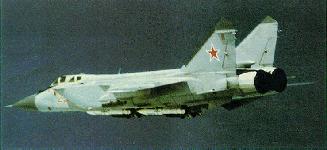
As early as 1965, the Soviets were writing about an anti-space defense mission, which they described as a component of their strategic defense program. To the Soviets, the main purpose of an anti-space defense would be to destroy space systems in orbits that were being used by the enemy for military purposes. The principal means of destruction would be special aircraft and vehicles controlled either from the ground or by crews onboard a space vehicle.
During the past decade allocated resources equivalent $400 billion to both strategic defensive programs in almost equal amounts - about $20 billion per year for each program. During the same time, the cost of Soviet military space programs approached $80 billion.
Soviet writings on the nature of future war suggest that strategic defenses will be expanding to include defense against cruise missiles and precision-guided conventional munitions that could be targeted against Soviet strategic forces in any protracted conventional war. As a result of this view of global conventional war fought under the constant threat of escalation to the use of nuclear weapons, the Soviets are likely to continue to enlarge their strategic defense and space operations beyond the extensive structure and investment existing today.
In addition to its ABM system, the USSR has a multifaceted operational strategic air defense network that dwarfs that of the US, as well as a wide-ranging research and development program in both traditional and advanced defenses. This active program employs various weapon systems to protect territory, military forces, and other key assets throughout the USSR. Moreover, the Soviets' passive program includes civil defense and structural hardening to protect important political, economic, and military leaders and facilities.
Recent activities in the Soviet strategic defense program are as follows:
- upgrading and modernizing the operational ABM defense, which is around Moscow;
-continued construction of a large phased array radar (LPAR) at Krasnoyarsk for ballistic missile early warning and tracking, in violation of the ABM Treaty;
-construction of three additional LPARs, bringing the number to nine;
-further modernization of strategic air defense forces;
-construction of a new over-the-horizon radar in the Soviet Far East for detecting long-range aircraft operating over the Pacific Ocean;
- continued extensive research into and development of advanced technologies for ballistic missile, ASAT, and air defense, including laser, particle beam, and kinetic energy weapons; and
- improving passive defenses by constructing and maintaining deep underground bunkers and blast shelters for key personnel and enhancing the survivability of some offensive systems through mobility and hardening.
Since the beginning of the nuclear age, the Soviets have placed great importance on limiting the amount of damage the USSR would suffer to key targets in a global war. They have organized and structured their strategic defense forces accordingly. For example, the National Air Defense Forces, which include missile and space defense, became an independent service in the late 1950s and have generally ranked third in prominence within the military, following the Strategic Rocket Forces and the Ground Forces. During the 1960s, the Soviets established the strategic defense missions for ASAT operations and ABM defense.
Soviet strategic defense forces play a role equal to that of offensive forces. In the event of war, nuclear or conventional, Soviet offensive forces are to:
- destroy or neutralize as much of the enemy's air and nuclear assets as possible on the ground or at sea before they are launched; and
- destroy or disrupt enemy air and nuclear associated command, control, and communications.
Soviet defensive efforts, designed to enhance the credibility of offensive forces, are to:
- intercept and destroy surviving retaliatory weapons aircraft and missiles before they reach their targets; and
- protect the Party, state, military forces, industrial infrastructure, and essential working population with active and passive defense measures.
As in a conventional conflict, if a war escalates to the use of strategic nuclear weapons, Soviet military doctrine calls for their forces to seize the initiative. Passive and active defensive systems would try to negate much of the US and allied capability for retaliation. The Soviet military holds defense from nuclear attack as a key, integrated component of their military strategy. From this Soviet perspective, any measures the West would take to defend itself are seen as potentially denying the achievement of key objectives within Soviet war-fighting strategy. For these reasons, the Soviets strenuously oppose the US Strategic Defense Initiative (SDI). At the same time, with consistency and vigor, the Soviets maintain their balanced offensive-defensive strategy in order to fulfill their strategic objectives.
Ballistic Missile Defense
Since 1978, the Soviets have been expanding and modernizing the ABM defenses at Moscow. The single-layer system includes 16 (originally 64) reloadable above-ground GALOSH launchers and the DOG HOUSE and CAT HOUSE battle management radars south of Moscow. The four firing complexes consist of TRY ADD tracking and guidance radars and four exoatmospheric interceptors (nuclear-armed, ground-based missiles designed to intercept reentry vehicles in space shortly before they reenter the Earth's atmosphere).
The new Moscow ABM system will be a two layer defense composed of silo-based, long-range, modified GALOSH interceptors; silo-based, probably nuclear-armed GAZELLE high-acceleration endoatmospheric interceptors (designed to engage reentry vehicles within the atmosphere); and associated engagement, guidance, and battle management radar systems, including the new PILL BOX large, four sided, phased-array radar at Pushkino north of Moscow. This modernization will bring Moscow's ABM defenses up to 100 operational ABM launchers, the limit permitted by the 1972 ABM Treaty. The new system could become fully operational in the late 1980s.
The current Soviet ICBM launch-detection satellite network can provide as much as 30 minutes' tactical warning and can determine the general origin of the missile. Additionally, two over-the-horizon radars that are directed at US ICBM fields could give about 30 minutes warning.
The next layer of ballistic missile detection consists of 11 large HEN HOUSE ballistic missile early warning radars at 6 locations on the periphery of the USSR. These radars can confirm the warning from the satellite and over the-horizon radar systems, characterize the size of an attack, and provide target-tracking data in support of antiballistic missile forces. The Soviets have improved the capabilities of the HEN HOUSE radars since the signing of the ABM Treaty.
Although the Soviet Union continues to maintain and upgrade its older network of ballistic missile detection and tracking systems, including launch-detection satellites andover-the-horizon radars, it is deploying a new series of LPARs.
The addition of three radars in the western USSR will form almost a complete circle of LPAR coverage around the USSR. These radars provide significantly improved target-tracking and -handling capabilities and add a redundancy in coverage over the existing HEN HOUSE network. In conjunction with the HEN HOUSE radars, the LPAR near Krasnoyarsk in Siberia, when fully operational, will close the final gap in the Soviet ballistic missile early warning radar coverage. The entire network could become fully operational in the mid-199Os.
The US and USSR, in signing the ABM Treaty, recognized the need for ballistic missile early warning radars while seeking to prevent their use for a nationwide antiballistic missile system. The ABM Treaty restricts the placement of ballistic missile early warning radars to the periphery of national territory and oriented outward. In that way, the desirable and legitimate goal of early warning could be advanced while minimizing the danger that the radar's target-tracking and impact-prediction capabilities could be used for effective nationwide ABM battle management.
The Krasnoyarsk radar, essentially identical to the other large phased-array radars that the Soviets have acknowledged to be for ballistic missile detection and tracking, violates the 1972 ABM Treaty. The radar is not located on the periphery of the USSR and pointed outward, as required for early warning radars. It is some 750 kilometers from the nearest border Mongolia and it is oriented not toward that border, but across approximately 4,000 kilometers of Soviet territory to the northeast.
The Soviet Union claims that the Krasnoyarsk radar is designed for space tracking rather than for ballistic missile early warning, and therefore does not violate the ABM Treaty. Its design and orientation make clear that this radar is intended for ballistic missile detection and target tracking in the LPAR network.
The growing network of large phased-array radars, of which the Krasnoyarsk radar is apart, is of particular concern when linked with other Soviet ABM efforts. These radars take years to construct and their existence could allow the Soviet Union to move quickly to deploy a nationwide ABM defense. The degree of redundancy being built into their LPAR network is not necessary for early warning. It is highly desirable, however, for ballistic missile defense.
During the 1970s, the Soviets developed components that could be integrated into an ABM system that would allow them to construct individual ABM sites in months rather than the years required for more traditional ABM systems. The development and testing of the components represent a potential violation of the ABM Treaty's prohibition against the development of a mobile land-based ABM system or components. By using such components along with the LPARs, the Soviets could strengthen the defenses of Moscow and defend targets in the western USSR and east of the Urals.
The Soviet Union has conducted tests that have involved air defense radars in ABM related activities. The large number, and consistency over time, of incidents of concurrent operation of ABM and SAM components plus Soviet failure to accommodate fully US concerns, indicate the USSR probably has violated the Treaty's prohibition on testing SAM components in an ABM mode. Additionally, the SA-10 and SA-X-12B/GIANT systems may have the potential to intercept some types of strategic ballistic missiles. Both systems are expected to have widespread deployment. The technical capabilities of these systems highlight the problem that improving technology is blurring the distinction between air defense and ABM systems. This problem will be further complicated as newer, more complex air defense missile systems are developed.
Taken together, all of their ABM and ABM related activities indicate a significant commitment to enhancing the strategic defenses of the USSR and suggest that the Soviets may be preparing an ABM defense of their nation.
Advanced ABM Technologies
In the late 1960s, the USSR initiated a substantial research program into advanced technologies applicable to ballistic missile defense systems. This effort covers many of the same technologies currently being explored for the US SDI but involves a much greater investment of plant space, capital, and manpower. The USSR will undoubtedly increase its efforts to acquire Western technologies associated with space and the SDI program.
Laser Weapons
The USSR's laser program is considerably larger than US efforts and involves over 10,000 scientists and engineers as well as more than a half-dozen major research and development facilities and test ranges. Much of this research takes place at the Sary-Shagan Missile Test Center, where ABM testing also is conducted. At Sary-Shagan alone, the Soviets are estimated to have several lasers for air defense and two lasers probably capable of damaging some components of satellites in orbit, one of which could be used in feasibility testing for ballistic missile defense applications. The Soviet laser weapons program would cost roughly $1 billion a year in the US.
Scientists in the USSR have been exploring three types of lasers that may prove useful for weapons applications the gas-dynamic, the electric discharge, and the chemical. They have achieved impressive output power levels with these lasers. The Soviets are possibly exploring the potential of visible and very-short-wave-length lasers. They are investigating the excimer, free-electron, and x-ray lasers, and they have been developing argonion lasers.
The Soviets appear generally capable of supplying the prime power, energy storage, and auxiliary components for their laser and other directed-energy weapons programs. They have probably been developing optical systems necessary for laser weapons to track and attack their targets. They produced a 1.2-meter segmented mirror for an astrophysical telescope in 1978 and claimed that this reflector was a prototype for a 25-meter mirror. A large mirror is considered necessary for a long-range space-based laser weapon system.
The USSR has progressed in some cases beyond technology research. It has ground-based lasers that have some capability to attack US satellites and could have a prototype space based antisatellite laser weapon by the end of the decade. Additionally, the Soviets could have prototypes for ground-based lasers for defense against ballistic missiles by the late 1980s and could begin testing components for a large scale deployment system in the early 1990s.
The remaining difficulties in fielding an operational laser system will require more development time. An operational ground-based laser for defense against ballistic missiles probably could not be deployed until the late l990s or after the year 2000. If technological developments prove successful, the Soviets might be able to deploy a space-based laser system for defense against ballistic missiles after the year 2000. The Soviets' efforts to develop high energy air defense laser weapons are likely to lead to ground-based deployments in the early l990s and to naval deployments in the early 1990s and to naval deployments in the mid-1990s.
Particle Beam Weapons
Since the late 1960s, the Soviets have been exploring the feasibility of using particle beams for a space-based weapon system. They maybe able to test a prototype space-based particle beam weapon intended to disrupt the electronics of satellites in the l990s. An operational system designed to destroy satellites could follow later, and application of a particle beam weapon capable of destroying missile boosters or warheads would require several additional years of research and development.
Soviet efforts in particle beams, particularly ion sources and radio-frequency accelerators for particle beams, are impressive. In fact, much of the US understanding of how particle beams could be made into practical weapons is based on Published Soviet research conducted in the late 1960s and 1970s.
Radio-Frequency Weapons
The USSR has conducted research in the use of strong radio-frequency (high-power microwave) signals that have the potential to interfere with or destroy critical electronic components of ballistic missile warheads or satellites. The Soviets could test a ground-based radio-frequency weapon capable of damaging satellites in the 1990s.
The Soviets also have research programs underway on kinetic energy weapons, which use the high-speed collision of a small object with the target as the kill mechanism. In the 1960s, the USSR developed an experimental "gun" that could shoot streams of particles of a heavy metal, such as tungsten or molybdenum, at speeds of nearly 25 kilometers per second in air and more than 60 kilometers per second in a vacuum.
Long-range, space-based kinetic energy weapons for defense against ballistic missiles probably could not be developed until at least the mid-199Os. However, the Soviets could deploy in the near term a short-range, space based system for space station defense or for close-in attack by a maneuvering satellite. Current Soviet guidance and control systems are probably adequate for effective kinetic energy weapons use against some objects in space,
Computer and Sensor Technology
Advanced technology weapons programs including potential advanced defenses against ballistic missiles and ASATs are dependent on remote sensor and computer technologies, areas in which the West currently leads the Soviet Union. The Soviets are devoting considerable resources to acquiring Western know-how and to improving their abilities and expertise in these technologies. An important part of that effort involves the increasing exploitation of open and clandestine access to Western technology. For example, the Soviets operate a well-funded program through third parties for the illegal purchase of US high-technology computers, test and calibration equipment, and sensors.
Passive Defenses
A key element of Soviet military doctrine calls for passive and active defense to act together to ensure wartime operations and survival. The Soviets have undertaken a major program to harden military assets to make them more resistant to attack. Included in this program are their ICBM silos, launch facilities, and some command-and-control centers.
The Soviets provide their Party and government leaders with hardened alternate command posts located well away from urban centers in addition to many deep underground bunkers and blast shelters in Soviet cities. This comprehensive and redundant network, patterned after a network designed for the Soviet Armed Forces, provides more than 1,500 hardened alternate facilities for more than 175,000 key Party and government personnel throughout the USSR. In contrast, the US passive defense effort is far smaller and more limited. It is in no way comparable to the comprehensive Soviet program.
Elaborate plans also have been made for the full mobilization of the national economy in support of a war effort. Reserves of vital materiel are maintained, many in hardened underground structures. Redundant industrial facilities are in active production. Industrial and other economic facilities are equipped with blast shelters for the work force, and detailed procedures have been developed for the relocation of selected production facilities. By planning for the survival of the essential workforce, the Soviets hope to reconstitute vital production programs using those industrial components that could be redirected or salvaged after an attack.
Additionally, the USSR has greatly emphasized mobility as a means of enhancing the survivability of military assets. The SS-20 and SS-25 missiles, for example, are mobile. The deployment of the rail-mobile SS-X-24 is expected soon. The Soviets are also developing an extensive network of mobile command, control,and communications facilities.
Antisatellite Operations
The Soviets continue to field the world's only operational ASAT system. It is launched into an orbit similar to that of the target satellite and, when it gets close enough, destroys the satellite by exploding a conventional warhead. The Soviet co-orbital antisatellite interceptor is reasonably capable of performing its missions, and thus it is a distinct threat to US low-altitude satellites.
Other Soviet systems have ASAT capabilities. The nuclear-armed GALOSH ABM interceptor deployed around Moscow has an inherent ASAT capability against low altitude satellites. The Sary-Shagan lasers maybe capable of damaging sensitive components onboard satellites. Although weather and atmospheric beam dispersion may limit the use of ground-based laser ASATs, such systems would quite likely have the major advantage of being able to refire and therefore to disable several targets.
During the next 10 years, the Soviets are likely to retain their current ASAT-capable systems while moving aggressively ahead in developing and deploying new ASAT systems. Their large-scale ballistic missile defense research and development efforts in laser, particle beam, radio-frequency, and kinetic energy technologies may also soon provide them with significant ASAT capabilities.
The development of a space-based laser ASAT that can disable several satellites is probably a high-priority Soviet objective. The Soviets may deploy space-based lasers for antisatellite purposes in the 1990s, if their technological developments prove successful. Space-based laser ASATs could be launched on demand, or maintained in orbit, or both. By storing a laser ASAT in orbit, the Soviets could reduce the time required to attack a target. This option would decrease the warning time available to the target needed to attempt countermeasures. The Soviets are also developing an airborne laser whose missions could include ASAT, and limited deployment could begin in the early 1990s.
Space Operations
The Soviets operate about 50 types of space systems for military and civilian uses. These systems include manned and man-associated spacecraft; space stations; reconnaissance vehicles; launch-detection satellites; and navigational, meteorological, and communications systems.
The USSR conducts approximately 100 space launches annually. Some launches have put as many as eight satellites in orbit from one launch vehicle. The number of active, usable satellites the Soviets maintain in orbit has increased from about 120 in 1982 to about 150 in 1986. At least 90 percent of the launches and satellites are military related and support both offensive and defensive operations. The USSR tries to mask the true nature of most of its space missions by declaring them as scientific. Because the 1967 Outer Space Treaty requires nations to register space launches with an agency of the United Nations, the Soviets acknowledge most of their space launch activity. Few details, however, are provided. The results and data of these missions are rarely published or disclosed except for some aspects of the manned program. Throughout, the Soviets steadfastly maintain they have no military space program.
The military emphasis is expected to continue in the years ahead. Of the approximately 200 operational Soviet satellites projected to be in orbit by the mid-199Os, about 150 will most likely have purely military missions, such as ocean reconnaissance, electronic intelligence, imagery reconnaissance, and special communications. Another 40 could support joint military-civilian functions, such as providing communications, navigation, and weather data. The manned program will fulfill both military and civilian missions. The approximately 10 remaining satellites could include interplanetary probes and other scientific missions.
The lifetimes and survivability of Soviet satellites are expected to increase in the next 10 years because of the incorporation of more sophisticated technology and the placement of satellites at higher altitudes. These moves would increase the satellites' fields of view and would make them less vulnerable to an ASAT attack.
Military Support From Space
Under cover of their COSMOS designator, the Soviets continue to develop and deploy space systems designed to support military operations on Earth. They now operate several types of space-based reconnaissance systems. Two of these, the radar ocean reconnaissance satellite and the electronic-intelligence ocean reconnaissance satellite, are used to locate naval forces that could be targeted for destruction by antiship weapons launched from Soviet platforms. The US has no comparable capability. Moreover, the Soviets actively practice their detection and targeting techniques, routinely launching these satellites to monitor both Soviet and NATO naval exercises.
The Soviets continue to expand an already mature satellite reconnaissance program. Several enhancements, such as incorporation of a data-relay satellite system, could improve the timeliness of their satellite reconnaissance data. Demonstrations of flexibility and versatility in launching and deploying their surveillance systems have continued, and the Soviets are capable of redirecting them for worldwide missions as situations dictate. Meanwhile, the satellite imagery reconnaissance capability has been refined, and space-based electronic intelligence assets are being upgraded.
Deployment continues of the Soviet space based global navigation satellite system known as GLONASS. This system will probably be capable of providing highly accurate positioning data to Soviet military and civilian users by the end of this decade. GLONASS is the Soviet version of the US NAVSTAR global positioning system (GPS). In fact, the Soviets acquired data on digital signal processing from GPS documents for inclusion in GLONASS. The GLONASS is being placed in a GPS-like orbit. Based on the 9 to 12 satellites announced for the system, GLONASS would have a worldwide, two-dimensional capability. If the Soviets want GLONASS to provide worldwide, three dimensional navigation updates, they would need to orbit 18 to 24 satellites.
The Soviets are increasing the number and variety of their communications satellites. They have filed their intent with the International Frequency Registration Board to place almost 100 individual communication payloads in more than 25 positions in the geostationary orbit belt. Some of the satellites are expected to be used to relay data between two ground sites, including ships, or between a satellite and ground sites. The Soviets demonstrated this capability by using a data-relay satellite to transmit television reports from the MIR(Peace) space station to the ground. By using such satellites, the Soviets would be able to communicate between ships, other satellites, and ground stations that are not within line of sight of each other. This technique increases the timeliness of these communications.
The Soviets will continue deploying their current launch-detection satellite network. They are probably working on a system for space-based detection of US submarine launched ballistic missiles (SLBMs), as well as European and Chinese missile launches. Although the USSR's land-based ballistic missile defense radar network permits detection of SLBM launches, a space-based geosynchronous launch-detection satellite system could significantly increase warning time. The Soviets probably have the technical capability to deploy an operational satellite system by the end of the decade.
New Space Launch Systems
The success of the Soviet space program is due largely to its versatile and reliable inventory of space launch vehicles (SLVs) and to its space launch and support facilities. About every third day, the Soviets launch a satellite, using one of eight types of operational SLVs. The USSR's impressive ability to launch various boosters and to orbit payloads quickly would give the Soviets a distinct operational military advantage in any crisis. Most malfunctioning satellites could be rapidly replaced, and additional satellites could be launched to cover new or expanding crisis areas. Nonetheless, the use of vehicles and satellites in surge launches could have a negative short-term effect by reducing rapidly their total number of available launchers and satellites. The Soviets are already expanding their extensive family of SLVs with new expendable launch vehicles and reusable manned spacecraft. The expected deployment of the medium-lift Titan IIIC-Class SL-X-16, the heavy-lift Saturn V-Class SL-W, a shuttle orbiter, and a space plane will increase the number and payload weight of satellites the Soviets will be capable of orbiting.
The SL-W heavy-lift vehicle will be used to launch the Soviet space shuttle orbiter. Launch pad compatibility testing of an orbiter attached to the SL-W vehicle may already have taken place, and a launch could come in 1987 or 1988. Soviet orbiter development has been heavily dependent on US orbiter propulsion, computer, materials, and airframe design technology. By using US technology and designs, the Soviets were able to produce an orbiter years earlier, and at far less cost, than if they had depended solely on their own technology. Money and scientific expertise could thus be diverted to other areas.
The location of the main engines at the base of the SL-W rather than on the orbiter gives the SL-W added versatility as a heavy-lift vehicle because it can launch heavy payloads other than the orbiter. The SL-W will be able to place payloads of over 100,000 kilograms into low Earth orbit, a figure comparable to the discontinued Saturn V. Potential payloads include modules for a large space station, components for a manned or unmanned interplanetary mission, and perhaps directed-energy ASAT antiballistic missile defense weapons.
The SL-X-16 booster is capable of placing a payload of more than 15,000 kilograms into low Earth orbit. This capability fills a gap in the current SLV inventory for an economical means of launching medium-weight payloads. A payload candidate for the SL-X-16 is the space plane, a different program than the space shuttle. A subscale version of this vehicle has been flight-tested in orbit and a full-scale version could be in production. This small, manned spacecraft could be used for quick-reaction, real-time reconnaissance missions, satellite repairs and maintenance, crew transport, space station defense, satellite inspection and, if necessary, negation. The SL X-16 has been flight-tested, placing at least three payloads into orbit, and will soon be fully operational. The Soviets are not expected to launch the space plane until they have had sufficient experience with the SL-X-16. Testing of a full-scale space plane could begin in the late 1980s.
When these two systems become operational, the Soviets will have 10 types of expendable launch vehicles, 4 of which will be man associated, and 3 different manned space vehicles - SOYUZ-TM (an improved SOYUZ-T crew ferry vehicle), the shuttle, and the space plane. The combination of these systems will give the Soviets even greater versatility and redundancy to conduct and to augment military operations in space.
Manned Operations
Despite a minor setback in late 1985, the Soviets made considerable progress toward achieving a permanent, militarily significant, manned presence in near-Earth orbit during 1986. Although forced to curtail a manned mission on their SALYUT-7/COSMOS-1686 space station complex in November 1985 when one of their cosmonauts became ill, the Soviets still launched the core vehicle of a modular space station in February 1986. MIR, as designated by the Soviets, is an impressive advancement over SALYUT-7, having enhanced solar energy and electrical power systems, greater computer capabilities, and individual "cabins" for crew members. Most significant, while SALYUT-7 had only two docking ports, MIR has six - one rear axial docking port, one forward axial port, and four forward lateral ports.
The MIR core vehicle is essentially a habitation and flight control center. Most of the cosmonauts' military and scientific work will take place in specially outfitted space station modules. These modules will provide the Soviets with greater flexibility in performing missions such as reconnaissance, targeting, and military-related R&D, as well as research in fields such as astrophysics, biology, and materials processing.
With the launch of MIR, the space station module, and SOYUZ-TM, the Soviets are well on their way to fulfilling their goal of establishing a permanent manned presence in space. The modular space station will probably house 3 to 12 cosmonauts. In the early-to-mid 1990s, the Soviets should be able to construct a very large modular space station. They have discussed ultimately housing up to 100 cosmonauts in this large space complex.
In March 1986, SOYUZ T-15 carried the first crew to MIR - mission commander Colonel Leonid Kizim and civilian flight engineer Vladimir Solovyov. These cosmonauts were in orbit for only 125 days, a short mission by Soviet standards, and they returned to Earth in July. Nonetheless, it was the most widely publicized Soviet manned space flight in 1986. Key events were often announced in advance and some events were televised live. These unprecedented developments were, in part, an effort to publicize Soviet accomplishments.
The mission was significant in an operational sense, however, because Kizim and Solovyov conducted the first manning and checkout of MIR, the initial use of a data-relay satellite to communicate with them, and the first station-to-station crew transfers. In early may, Kizim and Solovyov departed MIR aboard SOYUZ T-15 and docked with the SALYUT-7/COSMOS-1686 complex. After conducting numerous experiments and two sessions of extravehicular activity, the cosmonauts returned to MIR in late June and to Earth in mid-July.
In other significant developments, the USSR announced that international crew visits to the MIR complex will start in the fall of 1987, beginning with a Syrian cosmonaut. A Frenchman and a Bulgarian are scheduled to visit MIR on separate flights during 1988, and the Soviets are evidently discussing similar missions with other countries. At least one such mission a year can be expected during MIR's lifetime.
The Soviet manned space program occupies a unique position in the USSR's space efforts. It is heavily publicized to demonstrate the peaceful nature and technological superiority of the USSR's space efforts. Visits to the Soviet space station by foreign cosmonauts and the long missions by Soviet cosmonauts have been reported with great fanfare in the nation's news media. Nonetheless, the Soviets have made a strong commitment to using the manned space program to accelerate their drive to achieve space superiority.
Soviet literature reports that the military applications of remote sensing, oceanography, meteorology, and geodesy have been the focus of repeated cosmonaut investigations. Even subjects such as astronomical observations also performed by cosmonauts, have military uses. Such investigations, for example, can provide data useful for maintaining the orientation of certain equipment to an accuracy of a few arc-seconds, a capability needed to aim directed-energy weapons.
The ability to rendezvous and manually dock with uncooperative spacecraft, which Soviet cosmonauts demonstrated in 1985 and 1986 also has military applications. Cosmonauts use a laser rangefinder, a night vision device, and an optical sight while performing this operation. The Soviets state that this procedure will allow the rescue of cosmonauts stranded in orbit, but it could also be useful for repairing friendly satellites and for inspecting and disabling enemy satellites.
Conducting materials-processing experiments is an important cosmonaut function that has both civilian and military applications. Soviet efforts in this field, however, have concentrated on the production of substances with militarily significant applications regarding the development of semiconductor devices, infrared and optical detectors, and electro-optical systems.
Another crucial cosmonaut activity is Earth observation, which has implications for reconnaissance and targeting applications. The Soviets report that their cosmonauts have used visual observations, cameras, radars, spectrometers, and multispectral electro-optical sensors in their observations from SALYUT space stations. These experiments suggest the Soviets are evaluating their ability to locate, identify, and track targets from outer space as the first step toward designing a space weapons platform for use against targets in space and on Earth. Such a platform may eventually be used for ASAT and ballistic missile defense and operations as well as for space station defense.
The most ambitious space goal the Soviets have set is a cosmonaut mission to Mars. To undertake such a mission, the Soviets would need to lift very heavy components into low Earth orbit and to assemble them there. The SL-W will give them that capability. They would have to sustain cosmonauts in orbit for at least a year. A manned mission to Mars is a major reason for the long stays Soviet cosmonauts have undertaken on SALYUT stations. The cost of such a mission would be tremendous, but the Soviets would most likely expend the funds. Although very challenging, the Soviets could launch a manned mission to Mars in the first decade of the 21st century and probably could conduct a non-stop fly-by mission to Mars before the end of this century.
Space Program Costs
The high priority the Soviets are giving to their space program is reflected in the rapid overall growth of the program - a program that is absorbing a large share of the nation's most advanced and productive technology. Since 1980, the estimated dollar costs of the Soviet space effort have more than doubled, owing largely to programs for the manned space stations, new launch vehicles, supporting facilities, and the shuttle orbiter. The projected rate of growth in the space program, driven by the ambitious space-based manned program and future communications satellites, is expected to outpace overall trends in both military spending and GNP well into the future.
Air Defense
The USSR continues to modernize and expand what is already the most extensive strategic air defense network in the world. The mission is to be carried out by a strong pre-positioned national air defense force established in peacetime according to a unified concept and plan. The leadership appears to be in constant search for the optimum organizational structure of the air defense assets.
Major organizational changes instituted in 1980 transferred control of air defense aircraft, SAMs, and radars from national air defense authorities to local military district commanders. This change was probably implemented to provide battlefield commanders with greater flexibility. Even after reorganizing, the Soviets appeared to be dissatisfied with their air defense structure.
More recent shifts are apparently resubordinating surface-to-air missiles and aircraft back to the national air defense forces. The rationale may involve a desire for greater centralized control over weapons rather than the flexibility of the local commander in making certain decisions.
The Soviets have deployed a large number of strategic air defense systems with capabilities against aircraft flying at medium and high altitudes. They are now in the midst of a major effort to improve their capabilities against aircraft and cruise missiles that operate at low altitudes.
This effort includes upgrading their early warning and surveillance systems; deployment of more efficient data-transmission systems; as well as development and initial deployment of new aircraft, associated air-to-air missiles, SAMs, and airborne warning and control system (AWACS) aircraft.
Currently, the Soviets have more than 9,000 strategic SAM launchers, nearly 5,000 tactical SAM launchers (excluding handheld), and some 10,000 air defense radars. Approximately 2,250 air defense forces interceptor aircraft are dedicated to strategic defense. An additional 2,100 interceptors assigned to Soviet air Forces could be drawn upon for strategic defense missions. Collectively, these assets present a formidable defense barrier.
Aircraft
The most capable Soviet air defense interceptor aircraft, the FOXHOUND, has a look-down/shoot-down and multiple-target engagement capability. Over 150 FOXHOUNDs are now operationally deployed at several locations from the Arkhangelsk area in the northwestern USSR to the Soviet Far East. Thus far, the FOXHOUND has been dedicated to homeland air defense. Two new fighters, the FLANKER and the FULCRUM, also have look-down/shoot-down capabilities and are designed to be highly maneuverable in air-to-air combat. The Soviets have deployed approximatively 300 FULCRUMs to operational regiments in theater forces and are expected to introduce this aircraft into the homeland defense interceptor role in the future. They also have begun deploying the longer range FLANKER, both to strategic aviation and into air defense interceptor units in the USSR.
These three aircraft are equipped with three new air-to-air missiles. The FOXHOUND carries the long-range AA-9, and the FULCRUM and the FLANKER carry the medium-range AA-10 and the short-range AA-11. All can be used against low-flying targets.
The USSR also is deploying the MAINSTAY AWACS aircraft, which will substantially improve Soviet capabilities for airborne early warning and air battle management, especially against low-flying aircraft. The MIDAS, a tanker variant of the CANDID, is being introduced into the Soviet aircraft inventory and will be used in support of the strategic bombers and various air defense elements, including the new MAINSTAY.
Radars
The Soviets maintain the world's most extensive early warning system for air defense. It comprises a network of ground-based radars linked operationally with those of their Pact allies. As previously noted, more than 10,000 air surveillance radars provide virtually complete coverage at medium-to-high altitudes over the USSR and, in some areas, well beyond its borders. Three operational over-the-horizon radars for ballistic missile detection could provide additional long-range warning of the approach of high-flying aircraft. A new over-the-horizon radar under construction in the Far East will provide long-range detection of aircraft from the Pacific Ocean.
The USSR also has an active research and development program designed to improve its air surveillance network. In 1983, the Soviets began to deploy two types of air surveillance radars that will enhance Soviet capabilities for air defense, electronic warfare, and early warning of cruise missile and bomber attacks. The Soviet's are also continuing to deploy improved air surveillance data systems that can rapidly pass data from outlying radars through the air surveillance network to ground-controlled intercept sites and SAM command posts.
Surface-to-Air Missiles
Soviet strategic surface-to-air missiles provide low-to-high altitude barrier, area, and terminal defenses under all weather conditions. Five systems are now operational: the SA-1, SA-2, and SA-3, and the more capable SA-5 and SA-10. Over the years, the Soviets have continued to deploy the long-range SA-5 and have repeatedly modified this system. Further deployments and upgrades are probable in order to enhance the SA-5's capability to work with the newer SA-10. The even more capable all-altitude SA-X-12B/GIANT will soon become operational, thus further enhancing soviet strategic defenses.
The SA-10 offers significant advantages over older strategic surface-to-air missile systems, including multitarget handling and engagement characteristics, a capability against low altitude targets with small radar cross-sections such as cruise missiles, a capability against tactical ballistic missiles, and possibly a potential to intercept some types of strategic ballistic missiles.
The first SA-10 site became operational in 1980. Over 80 sites are now operational and work is progressing on at least another 20 sites. Nearly half of these sites are located near Moscow. This emphasis on Moscow as well as the deployment patterns noted for the other SA-10 sites suggest a first priority on terminal defense of command-and-control, military, and key industrial complexes.
In keeping with their drive toward mobility as a means of weapons survival, the Soviets have deployed a number of mobile SA-10 systems. This version, designated SA-10b, could be used to support Soviet theater forces and to permit periodic changes in the location of SA-10 sites within the USSR to counter the various kinds of US retaliatory forces more effectively.
The Soviets also have begun deploying another important mobile SAM system, the tactical SA-12A/GLADIATOR, and are flight-testing an even more capable, longer range, higher altitude complement, the SA-X-12B/GIANT. The SA-12 missile system is capable of intercepting aircraft at all altitudes as well as cruise missiles and tactical ballistic missiles.
As previously noted, the SA-X-12B may have the potential to intercept some types of strategic ballistic missiles. This SA-X-12B capability is a serious development because this system is expected to be deployed widely throughout the USSR. It could, if properly supported, add a measure of point-target defense coverage for a nationwide ABM deployment.
Sources : dia
Langganan:
Postingan (Atom)